

Hope After the Fall:
A Lesson from Superman's Story

This article was first published in the November 2025 edition of The Madison Express, the monthly newsletter of the Madison County, Ohio, Board of Developmental Disabilities.
Recently, I watched a documentary that has lingered with me: Super/Man: The Christopher Reeve Story. You probably remember Christopher Reeve as Superman—cape, strength, invincibility. But this film tells a fuller, much more human story.
It covers his journey both before and after the 1995 horse-riding accident that left him paralyzed from the neck down. We see home videos, hear from his children, and witness not just the public figure, but the father, the partner, the man learning how to live in a new body, with a new identity, and a lot of uncertainty.
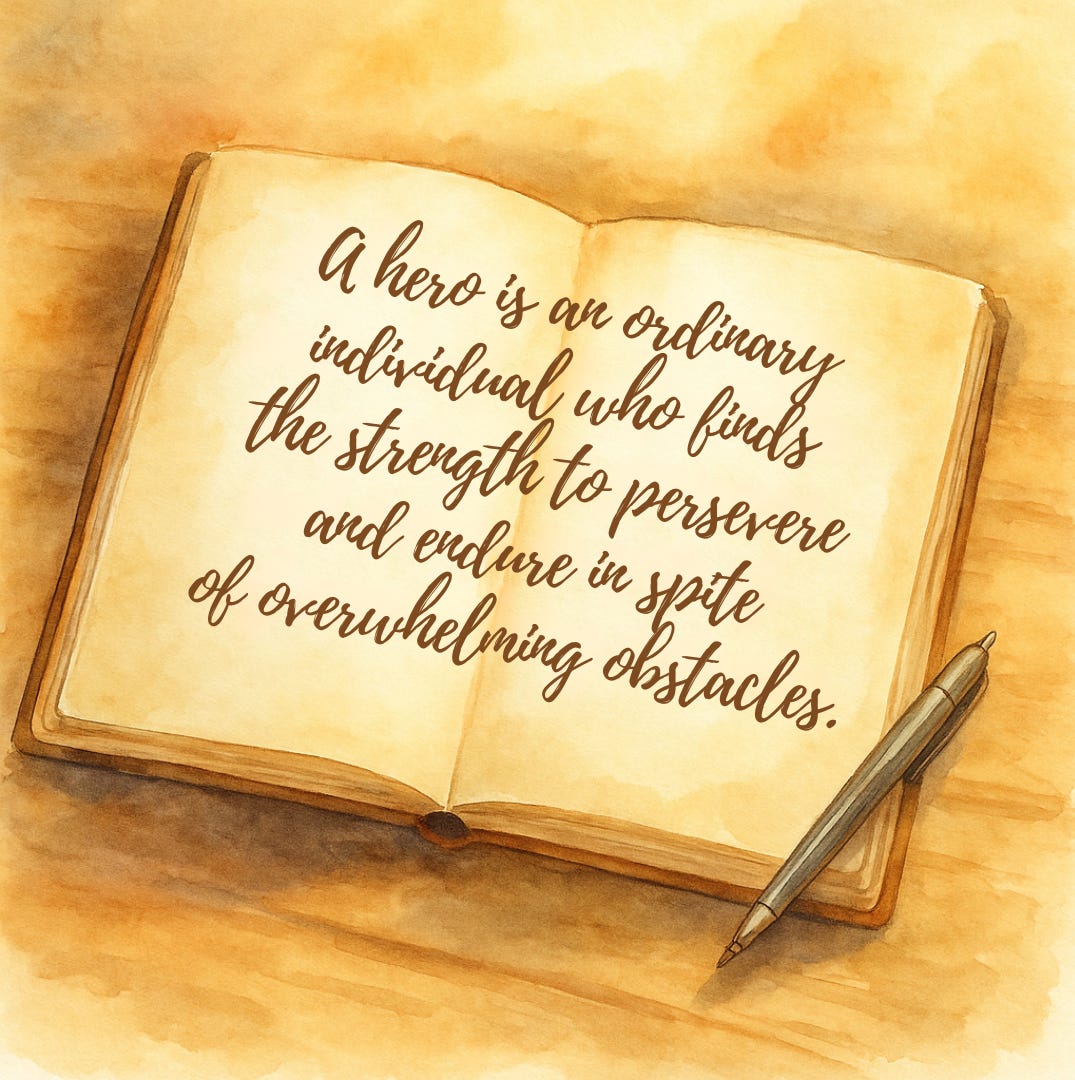
What struck me most was the redefinition of the word “hero.”
We’re so used to thinking of heroes as people who do something extraordinary, something big, bold, and brave. But Reeve himself said, “A hero is an ordinary individual who finds the strength to persevere and endure in spite of overwhelming obstacles.” That feels like something many of us live every day.
Because in this work, in this life, we all know grief doesn’t just show up when someone passes. Sometimes it arrives quietly, when plans shift, when abilities change, when milestones come and go differently than we expected. Sometimes it’s the grief of a diagnosis, or of watching a loved one navigate systems that aren’t always built for their success. It’s the grief of “what could have been,” and the ache of uncertainty.
But here’s the lesson I took from Christopher Reeve’s story: we don’t have to pretend to be unbreakable to be brave.
In fact, acknowledging the loss, the hard days, the exhaustion … that’s where courage begins. Whether you’re a parent adjusting to new realities, a provider holding space for someone else’s pain, or an individual navigating your own healing journey, showing up is heroic.
Reeve’s life after the accident wasn’t easy. He dealt with deep emotional lows, painful realities, and the heavy grief of losing what he once knew. But he also found purpose. He used his voice and platform to advocate for spinal cord injury research and disability rights. He re-learned how to live—not by denying his loss, but by journeying through it with honesty, persistence, and hope.
That’s the part I keep coming back to. Even after grief has come in and changed everything, it doesn’t get the final word. We still get to choose how we respond. And often, our greatest strength doesn’t come from fixing the pain, but from continuing on in the face of it.
So today, I just want to say: if you’re facing something hard, if grief is sitting quietly beside you this week, you’re not alone. And you don’t have to leap tall buildings in a single bound to be heroic. You just have to keep going.
We see you. And we’re walking with you.
Reeves’s wife was also a warrior